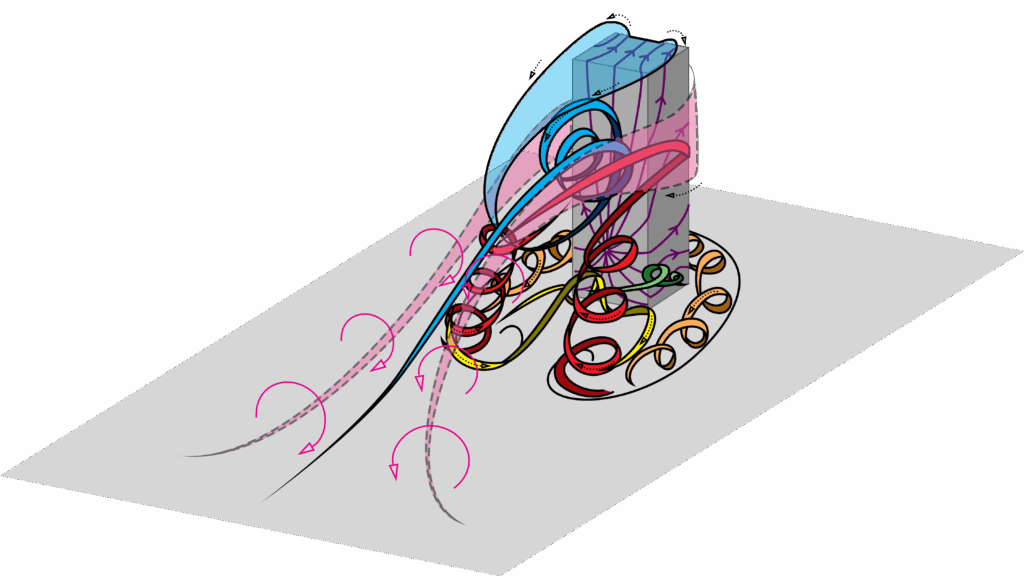
Source. Copyright © 2025 Elsevier B.V., its licensors, and contributors. Reproduced with permission.
We study the complex wake flows that are formed around obstacles like buildings, rotors, vehicles, vegetation canopies and electronic components.
We combine experimental methods and computational fluid dynamics (CFD) simulations to investigate the fundamentals of these flows, and explore ways we can apply them (or improve them) in applications in wind engineering, energy and biological systems.
At any given time, we may have open positions for undergraduate, MASc and PhD students.
We are committed to practising equity, diversity and inclusion in the workplace. We particularly welcome applications from women, Indigenous individuals, racialized individuals, individuals with disabilities and of the 2SLGBTQ+ communities, who have been traditionally underrepresented in Engineering.
Lab Pillars

Inclusive environment
People perform at their best when they feel included and safe to explore, be creative, make mistakes and share ideas. In our lab, we strive to create such an environment through frequent communication, flexible schedules, EDII discussions and by interacting on a first-name basis. Students’ unique cultures and experiences enrich our lab environment – they are welcomed and celebrated!
Professional development
We believe that skills and competencies in domains such as leadership, communication and interpersonal skills are essential for students to achieve their career ambitions. We offer technical workshops for professional development and we encourage and support our students in developing and executing a personalized goal-oriented study plan, promoting resilience and a growth mindset.

Collaboration
Our lab is founded on a collaborative framework, in partnership with our sister labs Aerodynamics & Wind Energy Lab and FEBUS Lab, as part of the Fluids Research Alliance at Queen’s (FLAQ). While students are individually responsible for their projects and expected to take ownership of their work, collaborations are encouraged throughout all stages of the research project.
We are part of the Fluids Research Alliance at Queen’s (FLAQ)
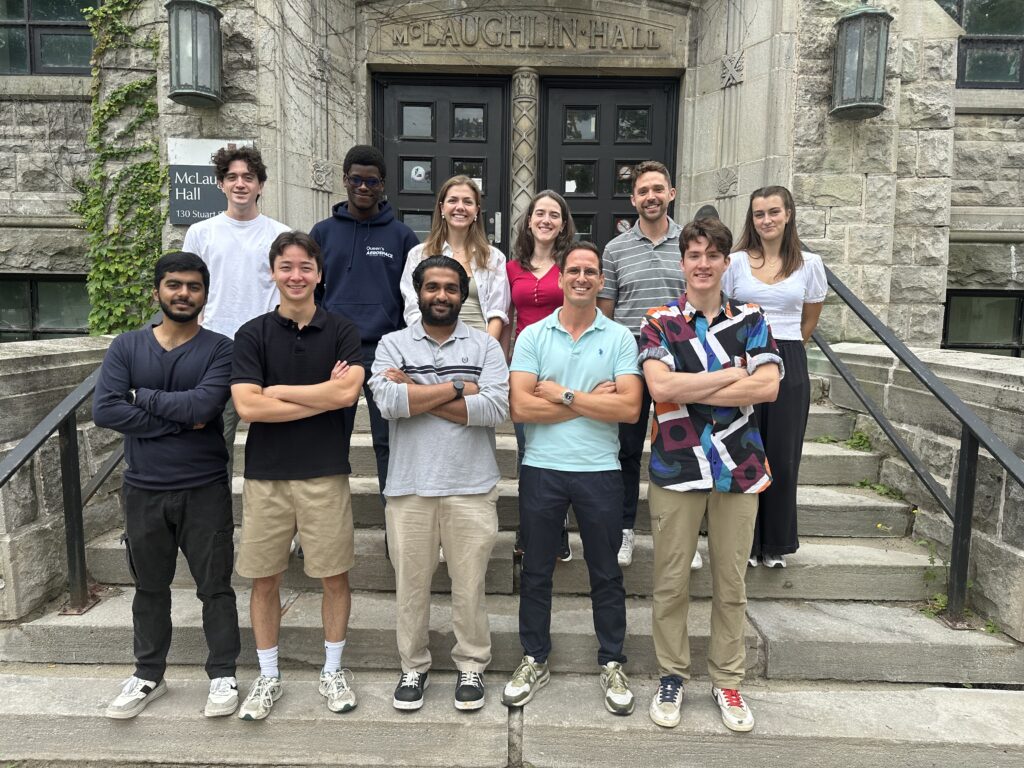
Summer 2025